Electric hoists are compact yet powerful lifting devices widely used in factories, warehouses, construction sites, ports, and many other industrial environments. Though small in size, electric hoists are highly engineered machines with complex internal structures.
To help customers better understand their performance and maintenance requirements, this article breaks down the key components of a typical electric hoist and explains their functions in simple terms.
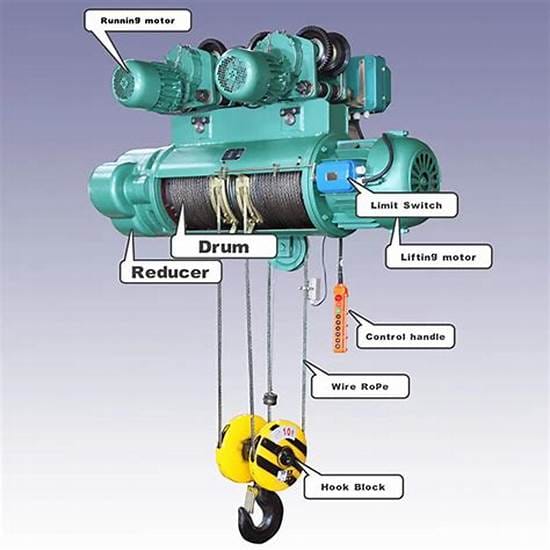
- Electric Motor
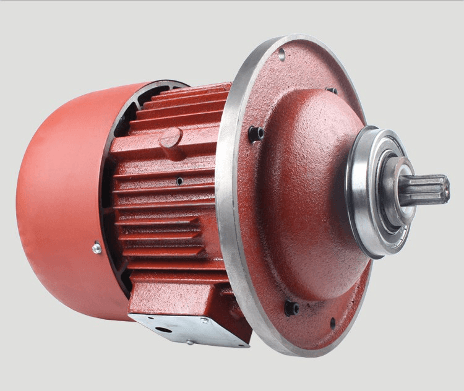
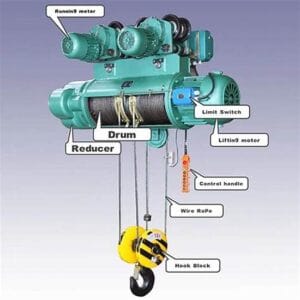
The motor is the heart of the hoist, providing the necessary power to lift and lower loads. Depending on the model, hoists may feature single-speed, dual-speed, or frequency-controlled motors for smoother and more precise operation.
- Common types: asynchronous motor, inverter motor
- Main function: drives the hoisting mechanism to move the load up or down
2. Gearbox (Reducer)

The gearbox connects the motor to the drum (or sprocket in chain hoists) and reduces the motor’s speed while increasing torque to ensure smooth and stable lifting.
- Made of high-strength alloy steel with excellent wear resistance
- Helps extend the service life of the hoist and reduce operational noise and vibration
3. Lifting Mechanism
This is the core part responsible for performing the lifting task, and its design depends on the type of hoist:
- Wire rope hoist: uses a drum to wind the steel rope and lift the load
- Chain hoist: lifts the load via a high-strength chain driven by a sprocket
Many hoists are also equipped with rope guides or chain guides to ensure smooth operation and prevent tangling or jamming.
4. Hook Assembly

The hook is the load-bearing component that connects directly to the object being lifted. It is usually made from forged high-strength steel and often includes a swivel mechanism for easier load positioning.
- Equipped with safety latches to prevent accidental disengagement
- Some models feature rotating bearings for smoother handling
5. Limit Switch

Limit switches are vital safety components that control the upper and lower travel range of the hook. They prevent over-lifting or over-lowering, which could damage the equipment or pose safety risks.
- Upper/lower limits are adjustable
- Automatically stops the hoist when movement exceeds preset limits
6. Control System

The control system is the “brain” of the hoist, receiving user commands and managing the machine’s operation. Common control options include:
- Wired push-button pendant
- Wireless remote control
- Intelligent inverter control (for premium models)
Advanced systems may include features like overload protection, fault alarms, voltage monitoring, and other smart safety functions.
7. Frame and Casing
The frame and housing protect internal components like the motor, gearbox, and drum, while also providing structural support. Materials typically include cast iron or high-strength aluminum alloy, offering good protection against dust, impact, and corrosion.
- Wire rope hoists usually feature a box-type rectangular frame
- Chain hoists are often housed in rounded, integrated casings
Conclusion: Every Component Matters
While an electric hoist may look simple from the outside, every component works together to ensure safe, efficient, and reliable lifting operations. By understanding the internal structure, you can:
- Make more informed purchasing decisions
- Perform routine maintenance more easily
- Identify and solve issues more effectively
As a professional supplier of lifting solutions, we offer electric hoists in various configurations to meet different project needs. Contact us today for detailed product catalogs and technical specifications tailored to your application.