In the selection of industrial factory lifting equipment, insufficient headroom is a common challenge faced by many customers. Old factories, renovation and expansion workshops, underground spaces, and similar scenarios often have limited space and low ceilings, making it difficult to install traditional cranes.
So, the questions are:
✅ Can cranes be installed when headroom is insufficient?
✅ How to achieve efficient lifting in low-height spaces?
✅ What specialized lifting solutions exist for low headroom environments?
This article will provide a detailed analysis of the characteristics, application scenarios, and advantages of low headroom cranes, helping you easily tackle complex working conditions!
1. What Is a Low Headroom Crane?
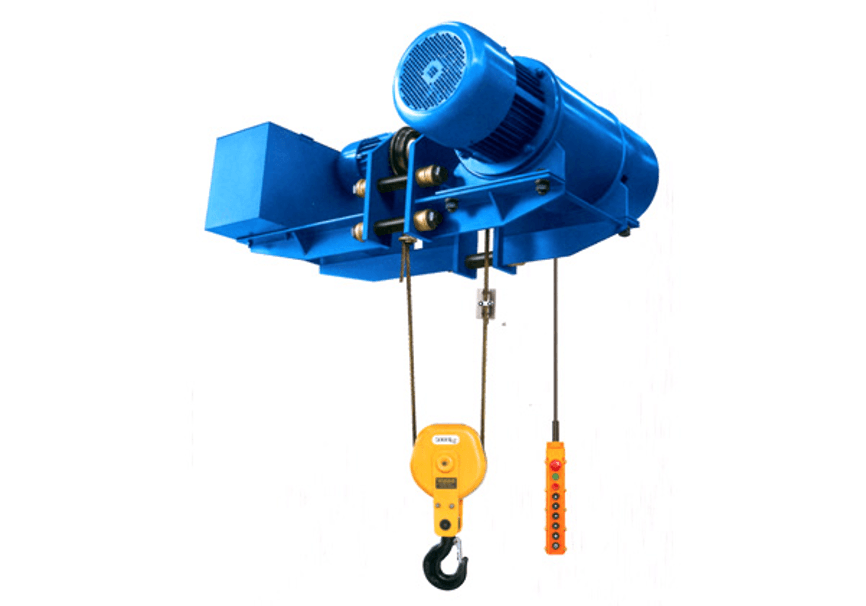
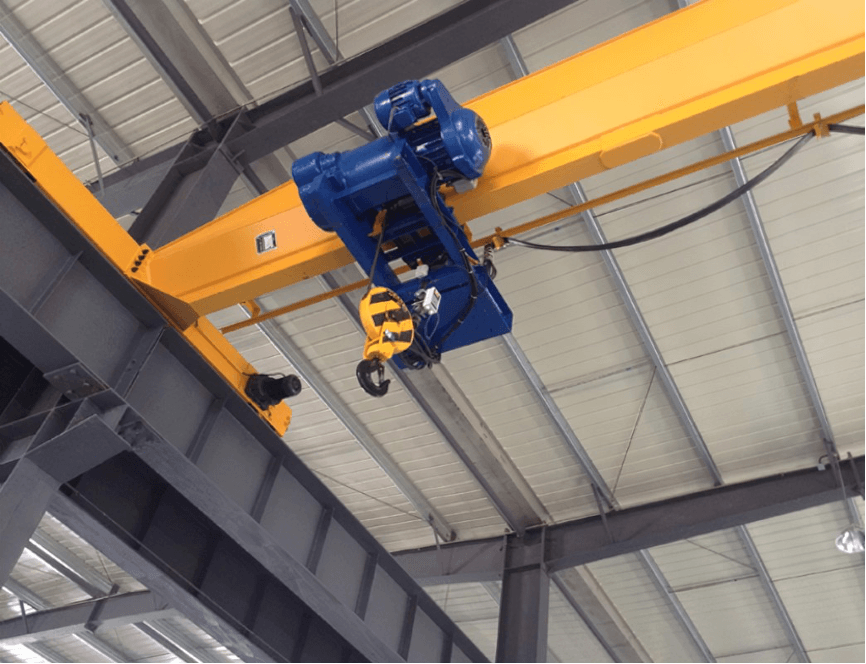
A Low Headroom Crane is lifting equipment specially designed to address the problem of insufficient factory height. By optimizing the structural layout and minimizing the hook upper limit dimension (H dimension), it maximizes lifting height within a confined space.
Common configurations include:
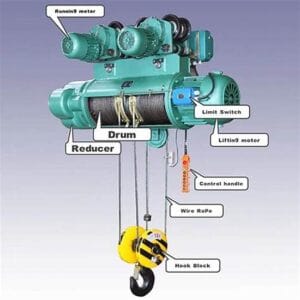
• Low headroom wire rope electric hoist
• Transverse hoist structure
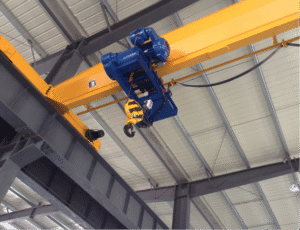
• Suspended single main beam
• Compact traveling trolley
2. Where Does the Low Headroom Issue Usually Occur?
| Application Scenario | Problem Characteristics | Suitable Solutions |
| Old factories / renovation projects | Fixed floor-to-ceiling height, cannot be changed | Use low headroom hoists + suspended main beam |
| Underground equipment rooms / pump stations | Lifting point below ground level | Choose compact structure cranes |
| Clean rooms / laboratories | Installation height limited | Use customized low headroom trolley systems |
| Small warehouses / logistics zones | Limited available space | Use down-curved rails or short-flange main beams |
3. Differences Between Low Headroom Cranes and Conventional Cranes
| Comparison Item | Conventional Crane | Low Headroom Crane |
| Hook Upper Limit Dimension (H) | Larger H value, wasting overhead space | Very small H value, maximizing lifting height |
| Installation Space Requirement | Requires relatively high space | Fits spaces as low as 2.5~4.5 meters |
| Main Beam Arrangement | Overhead bridge structure | Suspended or under-running structure |
| Lifting Mechanism | Mainly vertical arrangement | Transverse hoist design or side-mounted drum |
| Suitable Scenarios | Standard workshops and factories | Non-standard spaces, old factory retrofits, underground spaces |
4. Typical Technical Parameters (Customizable)
| Parameter Name | Specification Range |
| Lifting Capacity | 0.5t ~ 20t (customizable) |
| Lifting Height | 3m ~ 20m |
| Hook Limit Upper Dimension (H) | As low as 300 ~ 400 mm |
| Lifting Speed | Single speed / dual speed / variable frequency optional |
| Control Methods | Push-button floor control / wireless remote control / tandem control station |
| Structural Forms | Suspended / low headroom bridge / wall-mounted / electric single beam |
5. Why Choose a Low Headroom Crane?
✅ Space-saving: Can be installed in low-ceiling or confined factory spaces
✅ Increased effective working height: Extends working range by 10%~30% compared to conventional cranes
✅ Reduced civil engineering costs: No need to modify roofs or raise factory structures
✅ Strong customization flexibility: Tailored to your factory dimensions
✅ Improved lifting efficiency: Avoids hook collision with beams and restricted operation issues
6. Quick Customer Case Overview
Project Background: An automotive parts factory in the Middle East with a factory height of only 3.6 meters. The customer required lifting of 1.5-ton molds with a lifting height of 3 meters.
Solution: We configured a low headroom single beam crane combined with a transverse wire rope hoist system. The hoist and main beam height were minimized to achieve a hook limit height of 3.1 meters, perfectly meeting the operation requirements.
Customer Feedback: “Quick installation, improved space utilization, far beyond expectations.”